We use cookies to provide great user experience. By continuing on this site you accept use of the cookies.
We use cookies to provide great user experience. By continuing on this site you accept use of the cookies.



Oxyfluoride glass ceramics using silicate glass and various fluoride crystal counterparts which are superior for use in various optical applications.
Composite materials such as glass ceramics are important, functional materials which comprise the best properties of glass and crystalline matter. This provides a chemically stable, thermally, and mechanically-durable material with superior optical properties which are commonly characteristic of much more expensive, but also fragile crystals. This material finds many applications in the household and in industry.
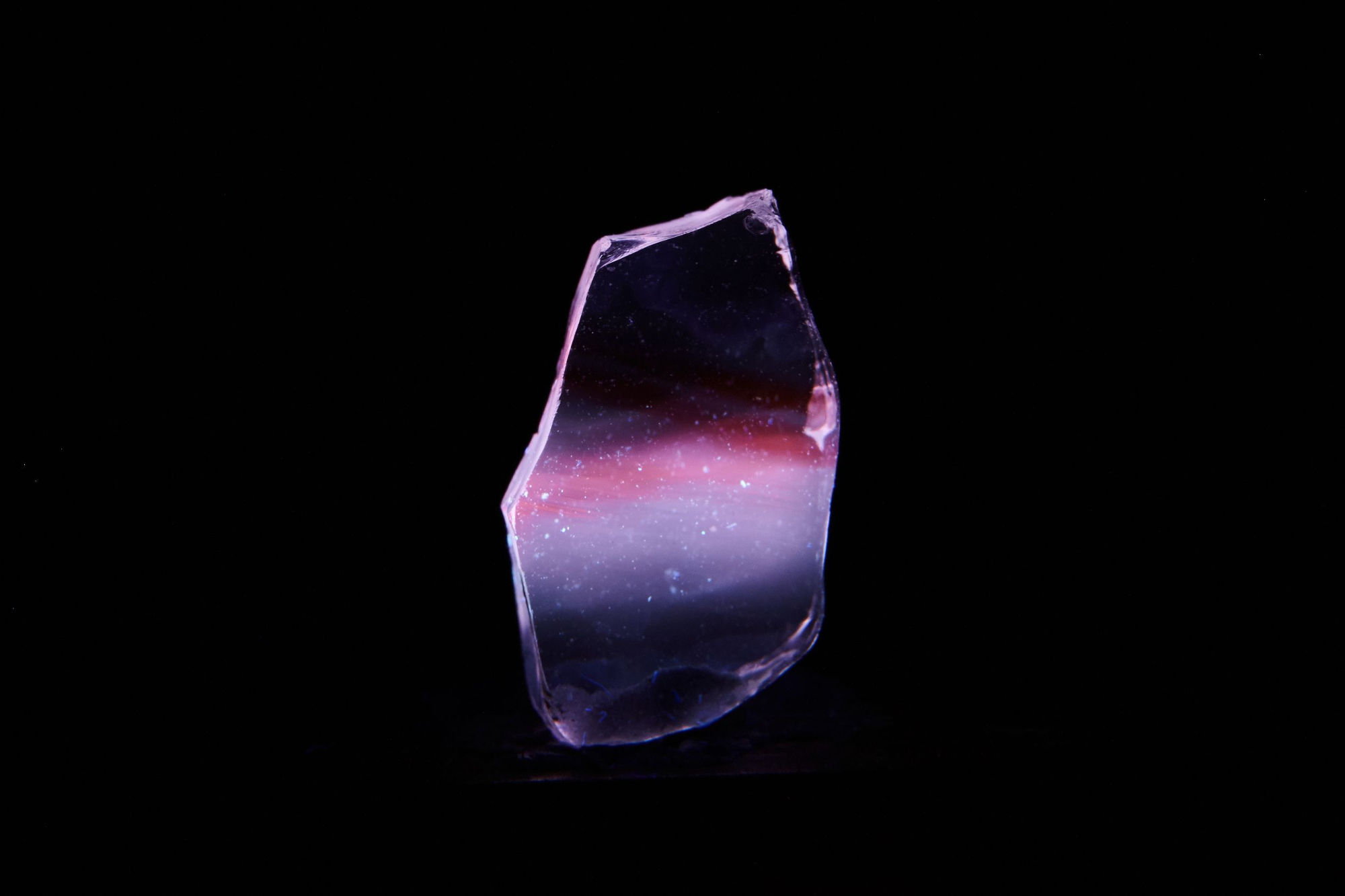
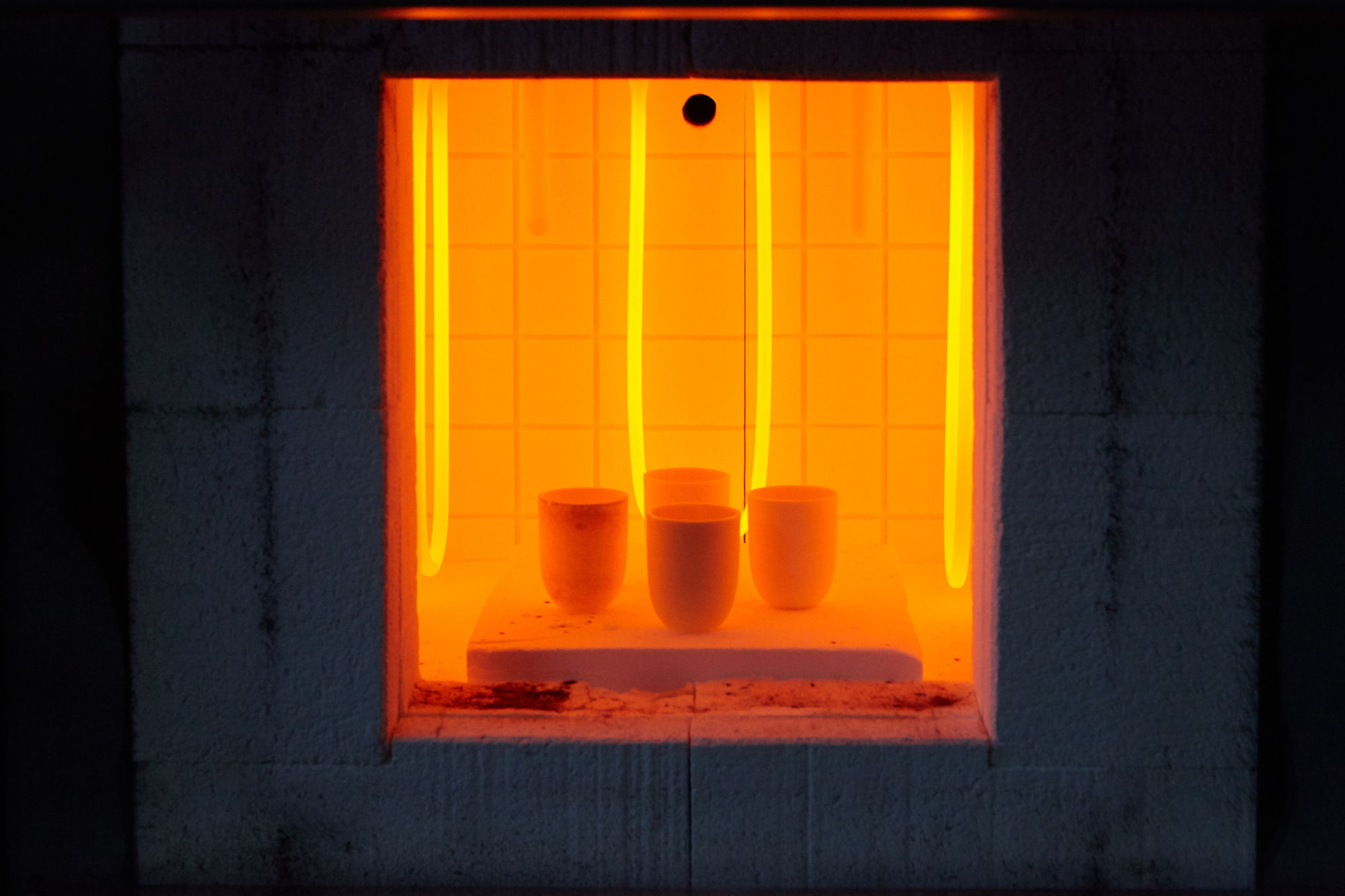
Before beginning our research, we select appropriate chemical compositions for the base glass, with the addition of optically active ions which also act as nucleating agents. Once the materials are selected, all starting ingredients are mixed in the crucible. The mix is then melted in the oven at high temperatures ranging from 1200°C – 1500°C depending on the materials used. Temperatures as high as 1750°C can be reached.
The melted substance is poured onto a stainless-steel block and immediately covered with another steel cover to provide rapid quenching and thus freezing the substance in a glass state. The raw glass material should be quenched at medium temperatures to release internal stresses under which the material could collapse. The quenched material is now ready for further treatment and manipulation.

Samples of the required size are cut to appropriate sizes and polished to fine optical quality for various analytical procedures. The size of incorporated crystallites depends on this treatment. Crystallites are formed around rare earth ions which also act as crystallisation centres.
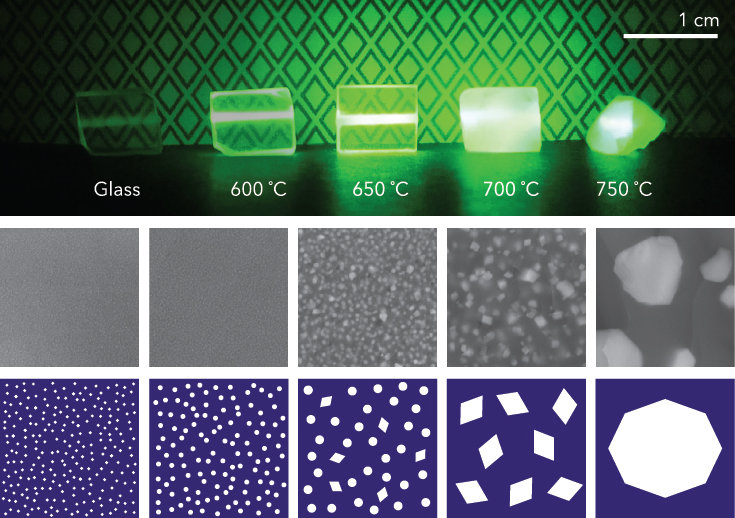
The size, shape and even crystallographic structure can be investigated.
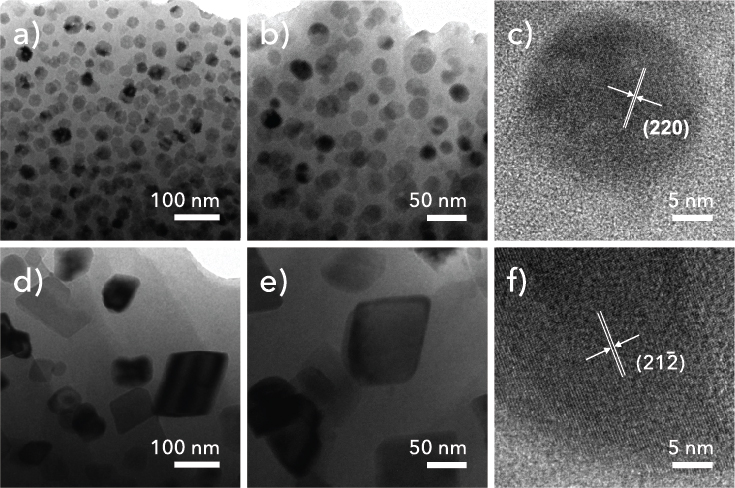
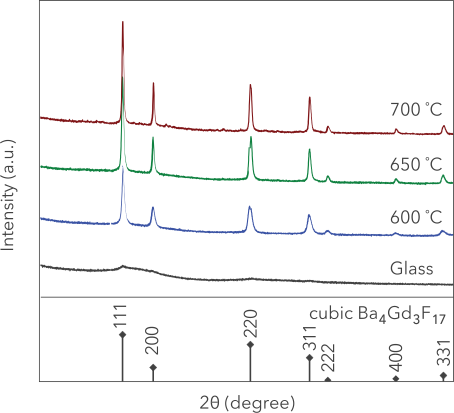
Obtained X-ray diffraction patterns directly show the crystallographic configuration of produced crystallites. Their size is temperature dependent.
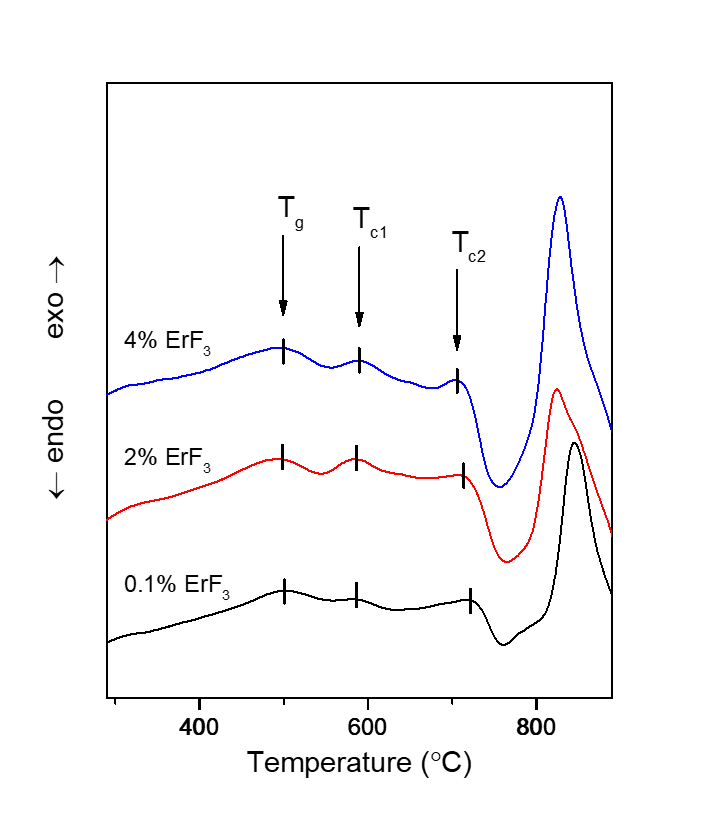
All oxyfluoride glass-ceramic samples undergo DTA analysis. This method reveals particular phase transitions in the sample and allows us to establish the parameters for further thermal treatment to obtain a successful final product.
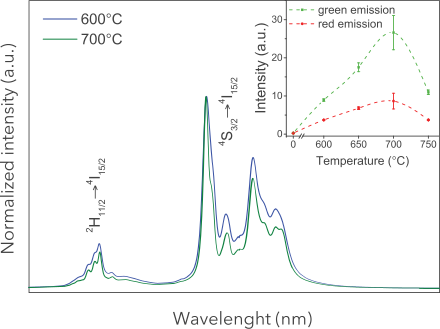
We use our versatile laser spectroscopy equipment to characterise optical properties of produced glass ceramics samples.
The structure of electronic centres are investigated with electron paramagnetic resonance spectroscopy (EPR). This method is a fundamental research tool in solid state physics for analysing paramagnetic centres in solid matter.